


Bell’s Palsy Recovery Timeline and How Acupuncture Speeds It Up
Waking up with one side of your face frozen is frightening. Bell’s palsy comes on fast, often overnight, and it affects roughly 40,000 people in the United States every year. The condition happens when the seventh cranial nerve, also called the facial nerve, becomes inflamed and compressed inside the narrow bony canal it travels through. Most people recover, but the timeline varies widely from person to person. Some regain full function in three weeks; others spend six months or longer working back toward normal movement. Early intervention matters more than almost anything else, and that includes acupuncture. Traditional Chinese Medicine has treated facial paralysis for well over a thousand years, and modern research now supports what practitioners have observed for generations.
What the Bell’s Palsy Recovery Timeline Actually Looks Like
The Bell’s palsy recovery timeline follows a general pattern, though individual results differ. Symptoms typically peak within 48 to 72 hours of onset, then plateau before improvement begins. About 70 percent of people with complete paralysis recover fully without treatment, and that number climbs higher for those with partial paralysis. The first three weeks are the most important window; nerve inflammation is still active, and treatment during this period has the greatest influence on outcome. Understanding what to expect at each stage helps you stay patient during the slow parts and recognize when progress is happening.
The First Two Weeks of the Bell’s Palsy Recovery Timeline
Onset is usually abrupt. Many people notice drooping when they look in the mirror in the morning, or a family member points it out. Symptoms often include an inability to close one eye, drooling, loss of taste on the front two-thirds of the tongue, and increased sensitivity to sound in one ear. Pain behind or below the ear frequently precedes the paralysis by a day or two. Some patients report a heavy, numb feeling across the affected cheek, though sensation itself remains intact. This is a motor nerve problem, not a sensory one, which is an important distinction.
Medical evaluation should happen immediately. Bell’s palsy is a diagnosis of exclusion, meaning your provider needs to rule out stroke, Lyme disease, Ramsay Hunt syndrome, tumors, and other causes of facial weakness. A key difference between Bell’s palsy and stroke is forehead involvement; Bell’s palsy affects the forehead on the involved side, while stroke usually spares it. Oral corticosteroids started within 72 hours of onset significantly improve recovery rates, so speed matters. Antivirals are sometimes added when a viral trigger is suspected. Eye protection is non-negotiable during this phase since an eye that will not close is vulnerable to corneal damage.
Acupuncture can begin during this early stage, and starting sooner is generally better. Treatment in the acute phase focuses on reducing inflammation and supporting local circulation around the facial nerve rather than aggressively stimulating muscles that are already irritated. Practitioners often use distal points on the hands, arms, and legs during the first several days, adding gentle local facial points as the acute inflammation settles. The approach is deliberately measured; overly strong stimulation too early is not helpful. Weekly or twice-weekly sessions are typical at this stage. Need help right away? Click here for our Bell’s palsy treatment information.

Weeks Three Through Twelve in the Bell’s Palsy Recovery Timeline
This is where most functional recovery happens. Facial nerve fibers that were compressed but not severed begin to conduct normally again, and movement returns in stages. Patients usually notice the eyelid first, followed by the corner of the mouth and finally the forehead. Small wins matter here; the ability to hold water in your mouth or close your eye halfway is real progress. Twitching and tingling in the cheek often signal returning nerve function, not a setback. Many people find this stage emotionally difficult because progress is gradual and uneven.
If you have not seen meaningful improvement by week three, the picture changes somewhat. Delayed recovery suggests more significant nerve damage, where the nerve fiber itself was disrupted rather than just compressed. Regrowth in these cases occurs at roughly one millimeter per day, which explains why recovery can stretch across many months. Electromyography testing is sometimes used to assess the degree of damage and predict outcome. This is not a reason to give up; it is a reason to commit to consistent treatment. Nerves regenerate slowly, but they do regenerate.
Acupuncture during this window shifts toward more active facial stimulation. Points along the affected side target the muscles supplied by the facial nerve, including those around the eye, cheek, and mouth. Electroacupuncture is sometimes added, using very low current to encourage muscle response and circulation. Facial exercises done at home between sessions support the work done in the clinic. Consistency produces results here more than intensity; two sessions a week over several weeks outperforms sporadic visits. Herbal formulas may be prescribed alongside treatment to address underlying patterns.
Months Three Through Twelve in the Bell’s Palsy Recovery Timeline
Recovery that extends past three months usually involves incomplete nerve regeneration. The remaining deficits vary; some people have mild asymmetry when smiling, while others deal with more noticeable weakness. This is the stage where complications sometimes appear, and knowing about them ahead of time reduces the alarm when they show up. Patience becomes part of the treatment plan. Improvement continues, just more slowly than it did in the earlier months.
Synkinesis is the most common late complication. It happens when regrowing nerve fibers connect to the wrong muscles, so closing your eye might pull the corner of your mouth, or smiling might narrow your eye. Roughly 15 percent of Bell’s palsy patients develop some degree of synkinesis. Crocodile tears, where the eye waters during eating, come from the same misdirected regrowth affecting the tear and salivary pathways. These are frustrating but manageable. Treatment focuses on retraining coordinated movement rather than building strength.
Acupuncture remains useful well into this stage, and many patients seek treatment months after onset when conventional options have run out. Work at this point centers on softening tight, contracted muscles, releasing tension patterns, and improving the quality of movement rather than just its presence. Sessions may be spaced further apart, moving from twice weekly to weekly to biweekly as function improves. Facial massage techniques such as Tui Na complement needle work by addressing muscle tightness directly. Progress in late-stage cases is real, though it takes longer to accumulate.
How Acupuncture Speeds Up Bell’s Palsy Recovery
Acupuncture works on Bell’s palsy through several mechanisms that researchers have studied over the past two decades. It improves local blood flow to the facial nerve and the muscles it controls, which supports healing and reduces the swelling that compresses the nerve inside its bony canal. Needling also stimulates peripheral nerve activity, which appears to encourage regeneration in damaged fibers. From a Traditional Chinese Medicine perspective, Bell’s palsy reflects wind invasion obstructing the channels of the face, and treatment aims to expel that pathogenic influence while restoring circulation of Qi and Blood. Both explanations point toward the same clinical goal.
Research Behind Acupuncture for Bell’s Palsy Recovery
Multiple systematic reviews have examined acupuncture for Bell’s palsy, with encouraging though sometimes mixed results. Studies from China, where acupuncture is standard care for facial paralysis, consistently show improved recovery rates and shorter timelines compared to medication alone. A number of trials found that combining acupuncture with corticosteroids produced better outcomes than steroids by themselves. Research quality varies, and reviewers frequently note the need for larger, better-designed trials. What is not disputed is the safety profile; adverse events are rare and minor when treatment is performed by a licensed practitioner.
The mechanism research is interesting. Imaging studies have shown changes in brain activity associated with facial motor control following acupuncture treatment, suggesting effects beyond the local tissue. Animal studies indicate that acupuncture stimulation influences nerve growth factor expression, which plays a direct role in nerve repair. Reduced inflammatory markers have also been observed following treatment. These findings do not prove everything practitioners claim, but they build a reasonable case for why the treatment produces the effects patients report.
Timing appears in the research repeatedly. Studies consistently show better outcomes when acupuncture begins within the first several weeks of onset. Patients who wait months before seeking treatment still improve, but the gains come more slowly and are often less complete. This mirrors what is known about nerve healing in general; the window for optimal recovery is finite. If you are reading this within days of your symptoms starting, the timing is on your side.
What Acupuncture Treatment for Bell’s Palsy Recovery Involves
A first visit includes a detailed intake covering when symptoms began, what treatments you have already received, and how the paralysis affects daily function. Your practitioner will assess the degree of weakness across different facial muscle groups and check for signs pointing to other causes. Pulse and tongue examination help identify the underlying pattern, which guides point selection. Treatment plans are individual; two patients with the same diagnosis may receive different points based on their overall presentation. The initial appointment usually runs longer than follow-ups.
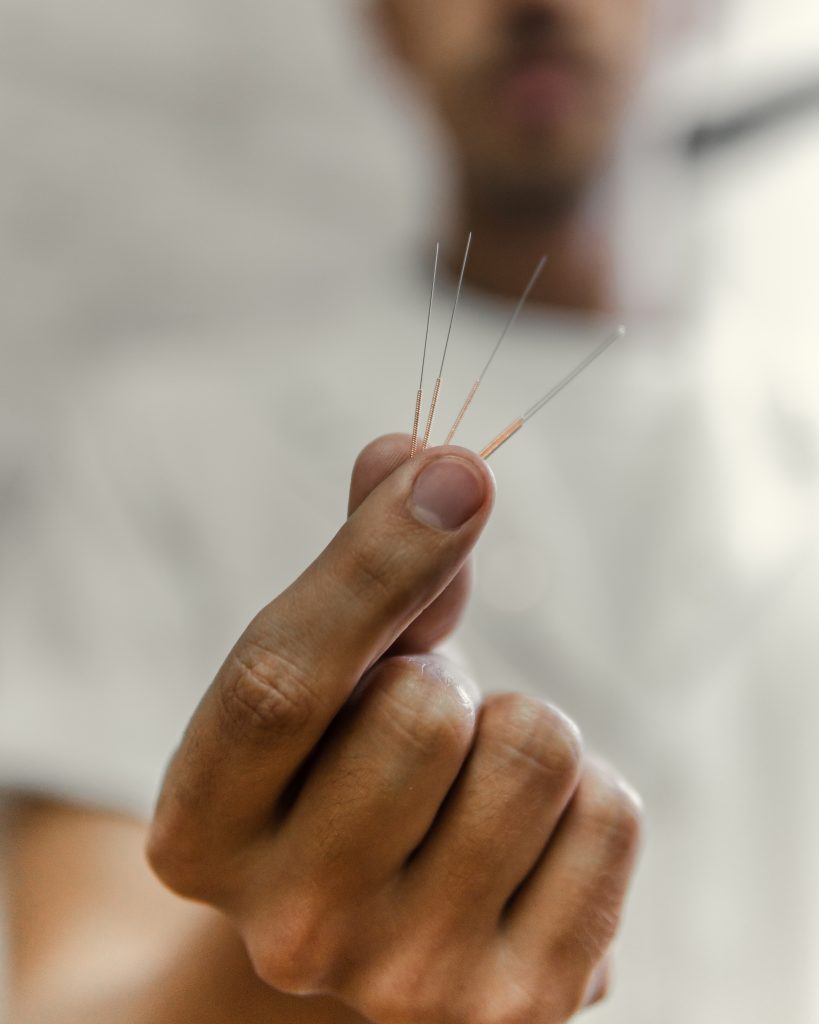
Needling for facial paralysis uses very fine needles inserted shallowly. Common local points include those near the eyebrow, beside the nose, at the corner of the mouth, and along the jawline. Distal points on the hands and feet support the local work and address systemic factors. Most people find facial acupuncture surprisingly comfortable; the sensation is a brief pinch at most, followed by nothing. Needles stay in place for 20 to 30 minutes while you rest. Many patients fall asleep during treatment.
Additional therapies frequently accompany the needles. Tui Na massage releases muscle tension and improves circulation across the affected side. Celluma LED therapy supports tissue healing through light-based stimulation. Microcurrent therapy can be paired with acupuncture to encourage muscle response in weakened areas. Chinese herbal formulas address the internal pattern contributing to the condition, and they are prescribed based on individual presentation rather than diagnosis alone. Want to know more about how herbs support nerve healing? Click here for our herbal medicine services.
Supporting Your Bell’s Palsy Recovery Between Acupuncture Sessions
Eye care comes first. If your eye does not close completely, you need lubricating drops during the day and ointment with a patch or taped closure at night. Corneal drying and abrasion are the most serious preventable complications of Bell’s palsy. Sunglasses outdoors reduce irritation from wind and light. Check with your provider about which products to use, since not all eye drops are appropriate for prolonged use.
Facial exercises help, but the approach depends on your stage. During early recovery, gentle movement attempts and light massage are appropriate; aggressive exercise against resistance is not. As function returns, slow and deliberate practice in front of a mirror helps retrain coordinated movement and reduces the risk of synkinesis developing. Small, controlled movements beat large forceful ones. Five to ten minutes several times daily is more effective than one long session.
Rest and stress reduction matter more than people expect. Bell’s palsy is often triggered or preceded by illness, exhaustion, or significant stress, and the same factors slow recovery. Sleep supports nerve repair directly. Warm compresses on the affected side ease discomfort and support circulation. Avoiding cold wind directly on the face is standard advice in Chinese medicine and reasonable regardless of your framework for understanding it.
Why You Need Professional Acupuncture Care for Bell’s Palsy
Bell’s palsy recovery is not something to leave entirely to chance. The difference between a full recovery and lasting asymmetry often comes down to what happens in the first several weeks. Professional acupuncture care gives you an active role in your recovery instead of waiting and hoping. It works alongside the medical treatment your doctor prescribes rather than replacing it. The sooner you start, the better positioned you are for a complete return of function.
Getting Bell’s Palsy Treatment From a Qualified Practitioner
Licensing matters for facial acupuncture. Points around the eyes and mouth require precise technique and thorough anatomical knowledge. A licensed acupuncturist has completed a master’s-level program with extensive clinical training hours and passed national board examinations. This is not a treatment to seek from someone with a weekend certification. Ask about credentials and experience with facial paralysis specifically.
Experience with Bell’s palsy in particular affects your results. A practitioner who has treated many cases recognizes the difference between the acute phase and the recovery phase, and adjusts technique accordingly. They know when to be gentle and when to increase stimulation. They also recognize warning signs that point toward a different diagnosis needing medical referral. That clinical judgment is not something you get from a protocol printed on a sheet.
Coordination with your medical care produces the best outcomes. Your acupuncturist should want to know what your physician prescribed and how you responded. Steroids, antivirals, and acupuncture work through different pathways, and combining them is supported by the research. A practitioner who dismisses conventional treatment is not serving you well. Integration beats competition every time.

Bell’s Palsy Treatment and Related Conditions We Address
Facial paralysis often arrives alongside other issues we treat regularly. Trigeminal neuralgia, TMJ dysfunction, and various forms of facial and head pain share anatomical territory with the facial nerve. Headaches and migraines commonly accompany or follow Bell’s palsy episodes. Treating the whole picture produces better results than addressing one symptom in isolation.
Nerve conditions in general respond well to consistent acupuncture care. We treat neuropathy, diabetic neuropathy, chemo-induced neuropathy, post-concussion syndrome, and shingles-related nerve pain. The underlying approach shares principles across these conditions even as the specific treatment differs. Nerve healing takes time in every case, and a treatment plan built around that reality serves patients better than one promising quick fixes.
Stress, anxiety, and poor sleep are frequently part of the Bell’s palsy story, both before onset and during recovery. Acupuncture addresses these directly, and improvement in sleep and stress levels supports physical healing. Many patients notice these secondary benefits before they see facial movement return. Dealing with nerve pain elsewhere in your body? Click here to learn about our neuropathy treatment options.
Why Choose Weng’s Acupuncture for Your Bell’s Palsy Recovery
Weng’s Acupuncture brings three generations of Traditional Chinese Medicine knowledge to every treatment. Facial paralysis is a condition Chinese medicine has treated for centuries, and that accumulated clinical experience informs how we approach each case. We combine classical technique with modern tools including microcurrent therapy and Celluma LED therapy. Our approach is holistic, addressing the whole person rather than the affected side of the face alone.
Our Spring Valley clinic serves patients across San Diego County, including La Mesa, El Cajon, Chula Vista, Lemon Grove, Bonita, National City, Santee, and La Presa. We build individual treatment plans rather than applying the same protocol to everyone. Herbal medicine, Tui Na, cupping, and nutritional guidance are available alongside acupuncture when they fit your situation. Follow-up sessions are scheduled around your recovery stage and adjusted as you progress.
Time matters with Bell’s palsy, so please do not wait to reach out. Call us at (619) 469-6327 to schedule an appointment, or email contact@wengsacupuncture.com with questions about treatment. You can find us at 9972 Campo Rd, Spring Valley, CA 91977. Starting treatment early gives you the best chance at complete recovery, and we are ready to help you get there.